Enrol today
Introduction to Yarn
The second module of Foundations of Industrial Knit as a separate, self-contained short course.
Delivery
Online
Course
Level
Beginner
Duration
1 hour
Price
$59 AUD
Course Overview
Write your awesome label here.
Overview
This course is your starting point for understanding one of the most fundamental elements of knitting: yarn. Whether you're new to textiles or brushing up on the basics, this is where your yarn journey begins.
You will explore key terms like yarn count, gauge, fibre types, and certifications — giving you a well-rounded foundation in how yarn is sourced, classified, and applied in industrial knitting. This course can be taken as a standalone learning unit or as part of a broader pathway into knitwear development and manufacturing.
This course is for you if...
-
You are curious about how yarn is measured, sourced, and used in different knit applications.
-
You want a solid foundation in understanding gauge, yarn count, fibre types, and certifications.
-
You are looking to build confidence in working with yarn before moving into more technical or advanced knit projects.
Course Curriculum
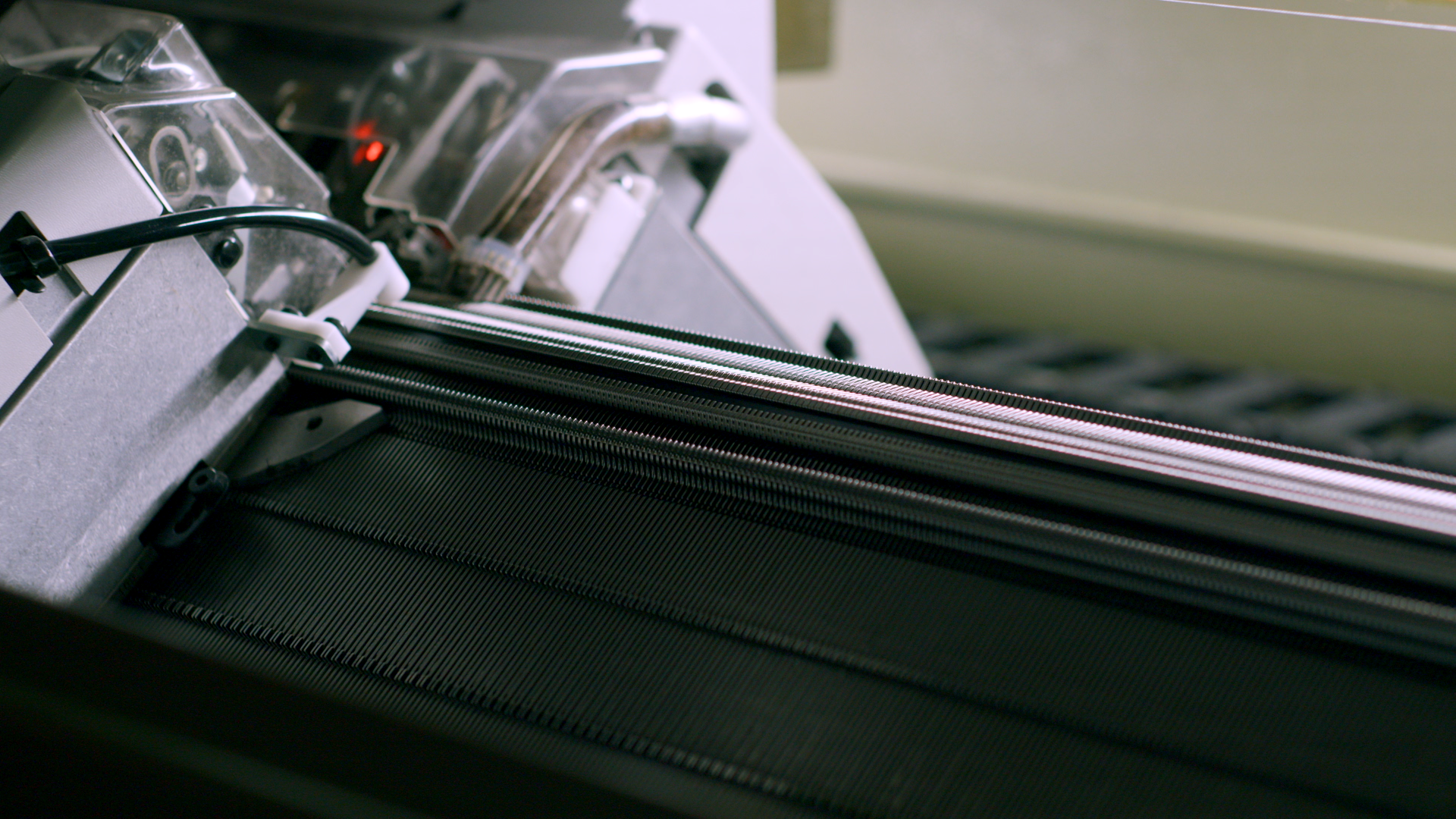
Yarn & Gauge
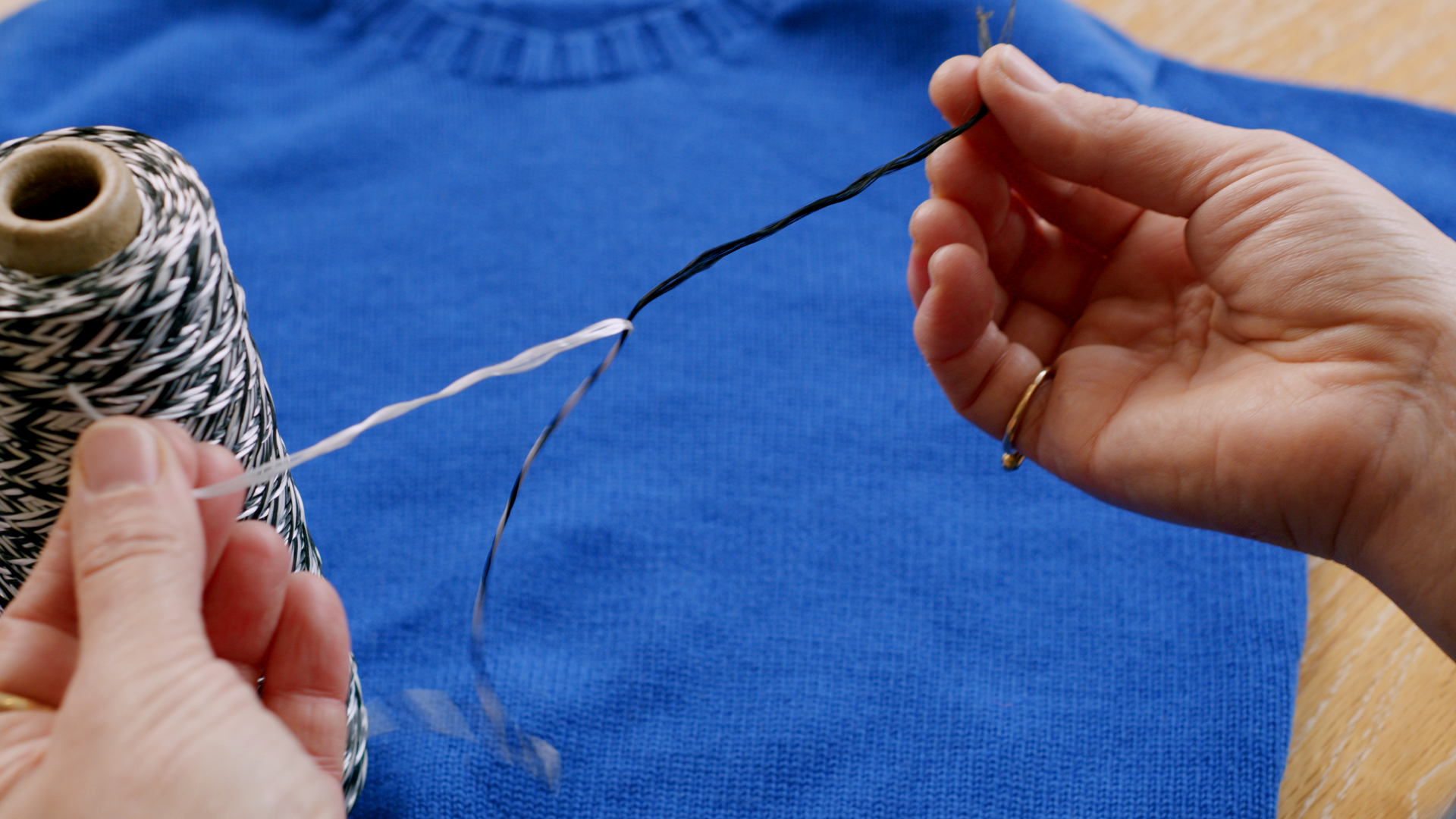
Explore how yarn type and machine gauge work together to influence fabric thickness, drape, garment weight, and cost. With garment examples and a breakdown of yarn count, this module equips you to make informed sourcing decisions based on gauge compatibility.

Yarn Count
Yarn count plays a critical role in shaping the texture, durability, and structure of your knit. This section breaks down how yarn is measured, the difference between direct and indirect systems, and how yarn count connects to machine gauge. Get the essential information you need to start making sense of yarn thickness—and how it can shape your design choices and machine compatibility.

Fibres
This topic looks at how fibre choice shapes comfort, performance, price, and sustainability in knitwear. You'll compare natural and synthetic options, assess fibre properties like micron and texture, and consider how material decisions influence garment quality and environmental impact.
Get a clear starting point for how fibre types influence design decisions, with practical guidance for making choices that balance creativity and sustainability.

Needles, Gauge and Yarn
This section breaks down how yarn count and machine gauge work together to shape fabric outcomes. You'll get an intro to how yarn thickness is measured and how needle spacing on different gauge machines affects the types of yarn you can use—laying the groundwork for confident material selection in any knit project.

Yarn Sourcing
This module shows how everything covered so far—fibre types, yarn count, gauge, and end use—comes into play when sourcing yarn. You’ll explore how to match material properties to your design goals, navigate certifications and sustainability considerations, and find practical sourcing options that work for different scales of production.

Yarn Certifications
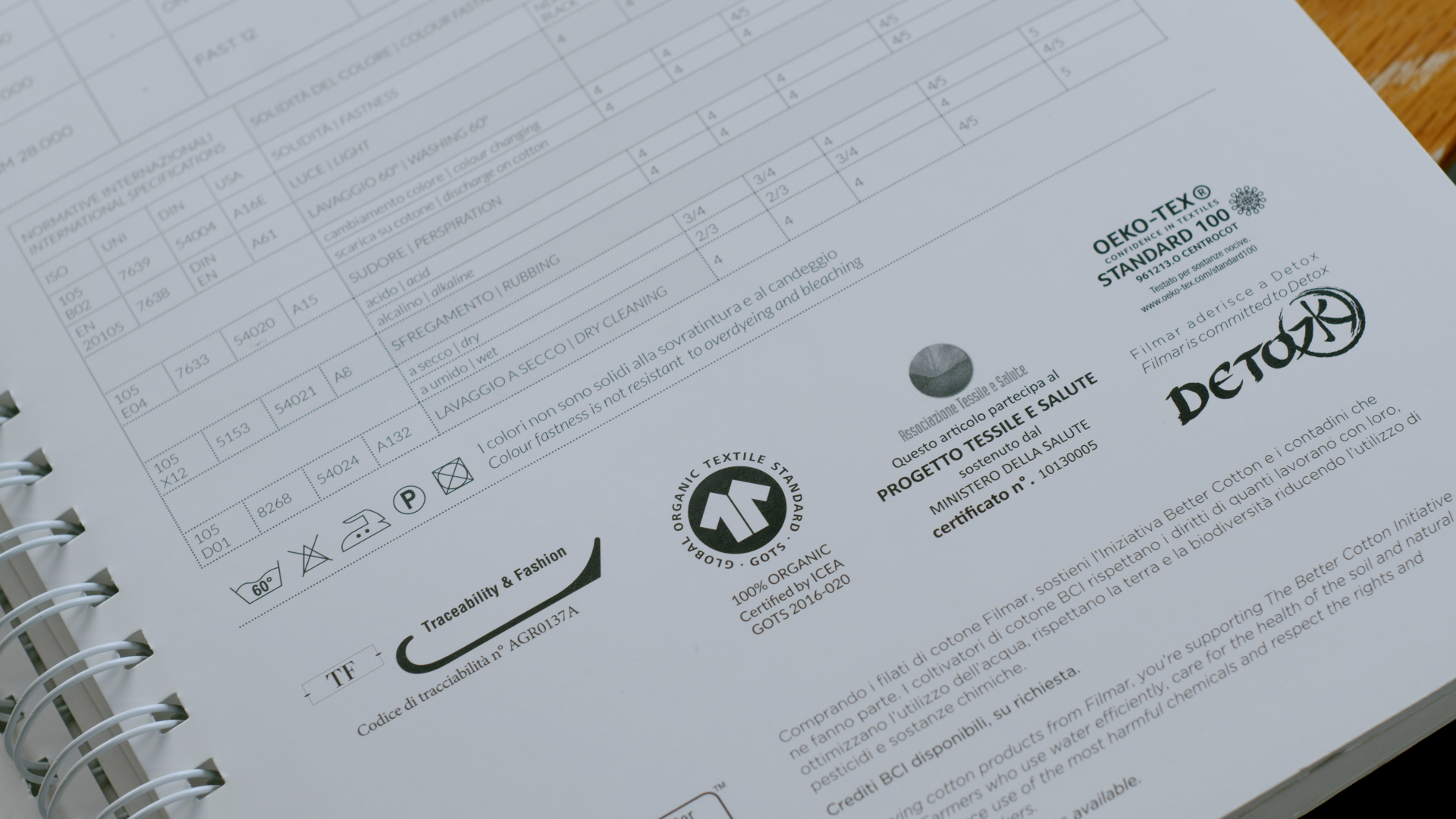
Certifications help connect your sourcing decisions to broader values like sustainability, ethical production, and material quality. This final topic introduces key certification types and shows how they can guide your yarn choices—whether for fashion or industrial use—by aligning with brand values, consumer expectations, and industry standards.

Included in this course . . .
-
15 minutes of video content breaking down each concept into digestible sections.
-
Supplementary materials with further explanations and supporting images.
-
Access to a community of learners and professionals to ask questions and share insights.
Your Instructor
Patricia brings over 15 years of dynamic experience in the circular, flatbed, and seamless knitwear industry, making her a leading expert in the field.
Her career has seen her excel in a variety of roles—product developer, designer, technician, programmer, and lecturer—giving her a rare and diverse skill set. With a strong foundation in both science and textiles, Patricia has become a recognised authority in knitwear innovation, design, and development, pushing the boundaries of what’s possible in the industry.
Beyond her leadership at Knovus and KNOLab, Patricia runs a thriving consulting practice, where she creates cutting-edge solutions for a wide range of industries. Her impressive portfolio includes everything from medical devices and furniture to sports accessories and fashion, showcasing her ability to innovate across diverse fields.

Contact Us
90 Grattan Street
Carlton, VIC
Australia
knovus@knovus.com.au
+61 (03) 96121147
Carlton, VIC
Australia
knovus@knovus.com.au
+61 (03) 96121147
Company
Social
-
Facebook
-
Instagram
Copyright © 2025
Weft Knit
A method of knitting where yarns are fed into the machine horizontally—across the width of the fabric—to create a series of interlocking loops
Warp Knit
Warp knitting is the formation of loops in a vertical direction using multiple strands of yarn, with each loop typically made from a separate thread and needle.
Wale
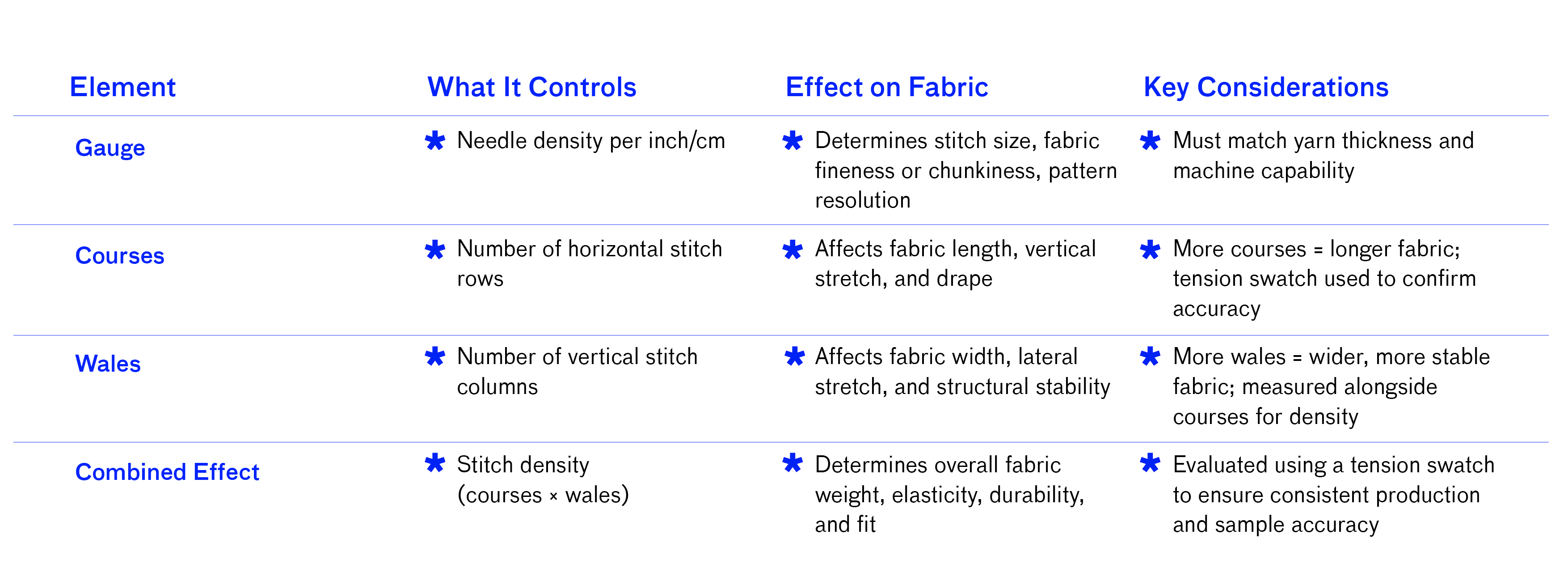
Vertical columns of stitches in the lengthwise direction of the fabric.
Thermal bonding
A process where heat is applied to fuse thermoplastic fibres within a non-woven web, creating bonds at fibre intersections.
Non-woven
Non-woven fabrics are created by bonding fibres together by various processes, such as mechanical, chemical, and thermal bonding
Mechanical bonding
A process of creating non-woven fabrics by physically entangling fibres to hold them together.
Knit
A textile produced by forming loops of yarn that are interlaced together, either across (weft knitting) or along the length of the fabric (warp knitting).
Flatbed knitting
Refers to the process or method of knitting using a flat, horizontal bed where yarn is fed in the weft direction to form fabric row by row.
Fibre
The basic raw material used to make yarns and fabrics. It refers to a fine, hair-like strand that can be natural or synthetic and is capable of being spun into thread or yarn.
Courses
Horizontal rows of stitches that run widthwise across the knitted fabric
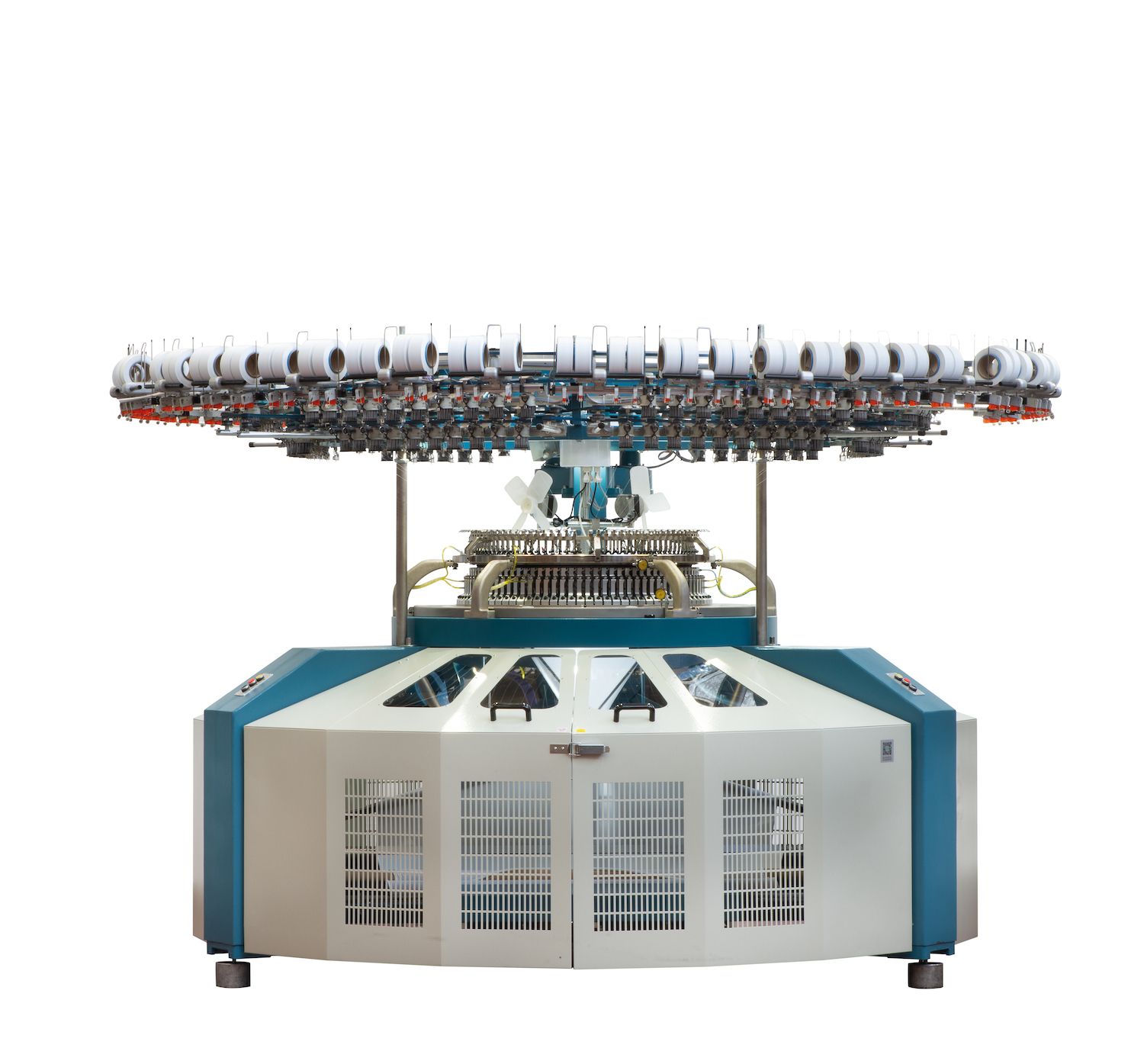
Circular knitting machine
Industrial circular-bed knitting machines that create tube-shaped pieces and are often used for larger and faster production. They are commonly used to produce finer knitwear.
Chemical bonding
A process in which fibres are joined together using adhesives or binders—such as resins or latex—that are applied to the fibre web and then cured, typically with heat, to create a stable, unified non-woven fabric structure.
Warp thread
The lengthwise yarns that run parallel to the selvedge of a woven textile.
Weft thread
The crosswise yarns that overlap and underlap the warp yarns are typically perpendicular to the selvedge in woven textiles.
Selvedge
The finished edge of a woven textile that runs along the lengthwise sides (parallel to the warp direction).
Shima Seiki
A Japanese company founded in 1962, renowned for its advanced computerised flatbed knitting machines, most notably the WHOLEGARMENT® technology, which produces seamless knitwear.
Gauge
The number of needles per inch on a needle bed.
Intarsia
A knitting technique used to create patterns or images with distinct blocks of colour, where each area is knitted with a separate yarn source and yarns are not carried across the back, resulting in a flat, single-layered fabric.
Multi-gauge
Knitting with a combination of needle combinations
Complete garment knitting
Complete knitting also known as seamless, or 3D knitting refers to a method of producing complete knitted garments directly on the machine, eliminating or significantly reducing the need for post-knitting assembly such as cutting and sewing.
Fully-fashioned
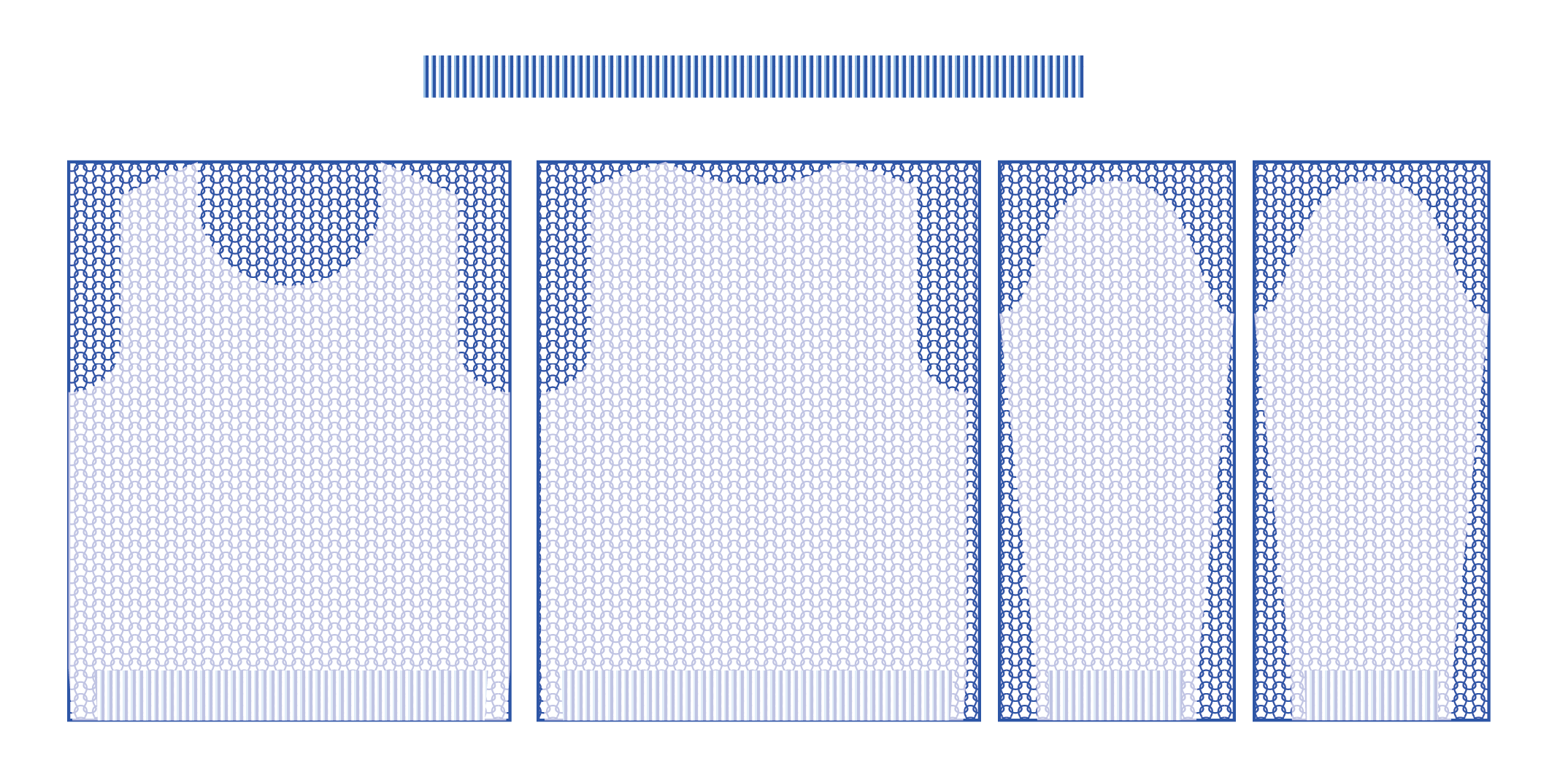
The shape of a garment piece is formed during knitting by increasing or decreasing stitches, rather than cutting fabric after knitting. This method allows for precise shaping (such as armholes, necklines, or sleeves) and produces pieces that require minimal trimming, resulting in a cleaner finish, less waste, and often a better fit.
Jacquard
A knitting technique used to create multicolour patterns or motifs by selectively knitting different yarns across a fabric row. Unlike intarsia, jacquard patterns are made by carrying floats (unused yarns) across the back of the fabric, allowing for repeated designs and fine detail.
Knit programming
The process of creating machine-readable instructions that control computerised knitting machines to produce specific knit structures, patterns, and garments.
Technician
A skilled specialist responsible for the setup, adjustment, operation, and troubleshooting of knitting machinery.
Manufacturer
The company or facility that produces knitted garments or fabric at scale. They manage the full process from programming and sampling to final production, often working with designers, brands, or developers.
Knit Programmer
A knit programmer is a specialist who translates a design into a machine-executable file using the compatible software for a specific type of knitting machine
Software
In knitting, software refers to the digital tools used to design, simulate, and program knitted fabrics or garments.
Production
The full process of manufacturing knit garments or fabric at scale, using programmed knitting machines. It begins after sampling and programming are finalised, and involves running machines continuously to produce finished pieces ready for linking, seaming, or finishing.
Specification Sheet
A document that outlines all the technical details and requirements for a knitted product. It includes measurements, yarn types, stitch structures, construction notes, gauge, machine type, and finishing instructions used by manufacturers to ensure consistency and accuracy in production.
Yarn feeder/carrier
A moving component in a knitting machine that delivers yarn to the needles during the knitting process.
Needle bed
The needle bed is the component of a knitting machine that holds and guides the needles, allowing them to slide and create stitches.
Stitch
The loop formed by the yarn during the knitting process.
Virtual Simulation
The process of using software (like Shima Seiki APEX) to digitally visualise a knitted fabric or garment.
Product Development
The end-to-end process of turning a concept into a finished product. It includes design, material selection, programming, sampling, testing, and refining before full-scale production begins.
Cut & Sew
A process where knitted fabric is produced in large panels and then cut and sewn together to create finished garments.
Yarn Type
The material and structure of the yarn, including its fibre content (e.g. cotton, wool), thickness, twist, and whether it's spun or filament.
Tension
The size of the knitted loops and the takedown pressure applied during knitting.
Speed
The rate at which the knitting machine operates.
Take-down mechanism
This mechanism maintains fabric tension during knitting using roller systems or pull-down mechanisms.
Drape
The way a fabric hangs and flows when worn or handled.
Stitch density
The total number of loops in a measured area of fabric (such as a square inch or three square centimetres).
Pattern resolution
The level of detail and clarity a knitted pattern can achieve is determined by the stitch size, gauge, and machine capability.
Carriage
A movable component of a knitting machine that guides the yarn carrier across the needle bed to deliver yarn to the selected needles, producing the knitted fabric.
Machine gauge
The spacing of the needles on the needle bed (usually as needles per inch)
Yarn Count
The yarn count number indicates the linear density (yarn diameter or fineness) to which that particular yarn has been spun
Stock service
A yarn stock service provides ready-to-shop yarns, often in a variety of colours, to customers.
Natural fibre
A fibre obtained from plants, animals, or minerals that can be spun into threads or yarns such as cotton, wool, silk, or flax.
Synthetic fibre
A man-made fibre produced by polymerisation, a chemical process that combines small molecules into polymers; examples include polyester, nylon, and acrylic.
Regenerated (semi-synthetic) fibre
A fibre derived from natural resources that has undergone an intensive chemical transformation process.
Full gauge
Knitting with every needle.
Half gauge
Knitting with every second needle
The Direct System
The Direct System yarn count is the WEIGHT of a FIXED LENGTH of yarn (Weight per unit Length).
The Indirect System
The LENGTH of a FIXED WEIGHT of yarn (Length per unit Weight).
Numero metric (Nm)
Length in meters per 1 gram of mass.
Tex (tex)
Mass of yarn in grams per 1000 meters length.
Denier (den) fibre
Mass of yarn in grams for length of 9000 metres
Decitex (text)
Grams per 10,000 metres (10 kilometres)
English Cotton Count (ECC or Ne) fibre
Number of 840 yards of strands per 1 English pound of mass
Tech pack
The technical documentation that is created for garment or textile products. It contains flat sketches, material specifications, dimensions, instructions, and everything else the manufacturer needs to create products accurately.
Flatbed knitting machine
Industrial knitting machinery that has needle beds that sit flat, in a 'V' formation. The yarn passes across the needle bed horizontally.
Microbial cellulose
A natural, biodegradable biopolymer synthesised by various bacteria.
Stitch Cams
A shaped mechanical component within the knitting machine’s cam system that controls how far needles move downward to form loops. It determines the loop length (stitch size), affecting fabric density and texture.
System
A system refers to a complete yarn-feeding and needle-activating unit within the carriage that forms stitches independently during a knitting pass.
Auto yarn feeders
A motorised yarn feeder that moves independently of the carriage, allowing yarn changes without requiring extra carriage passes.